
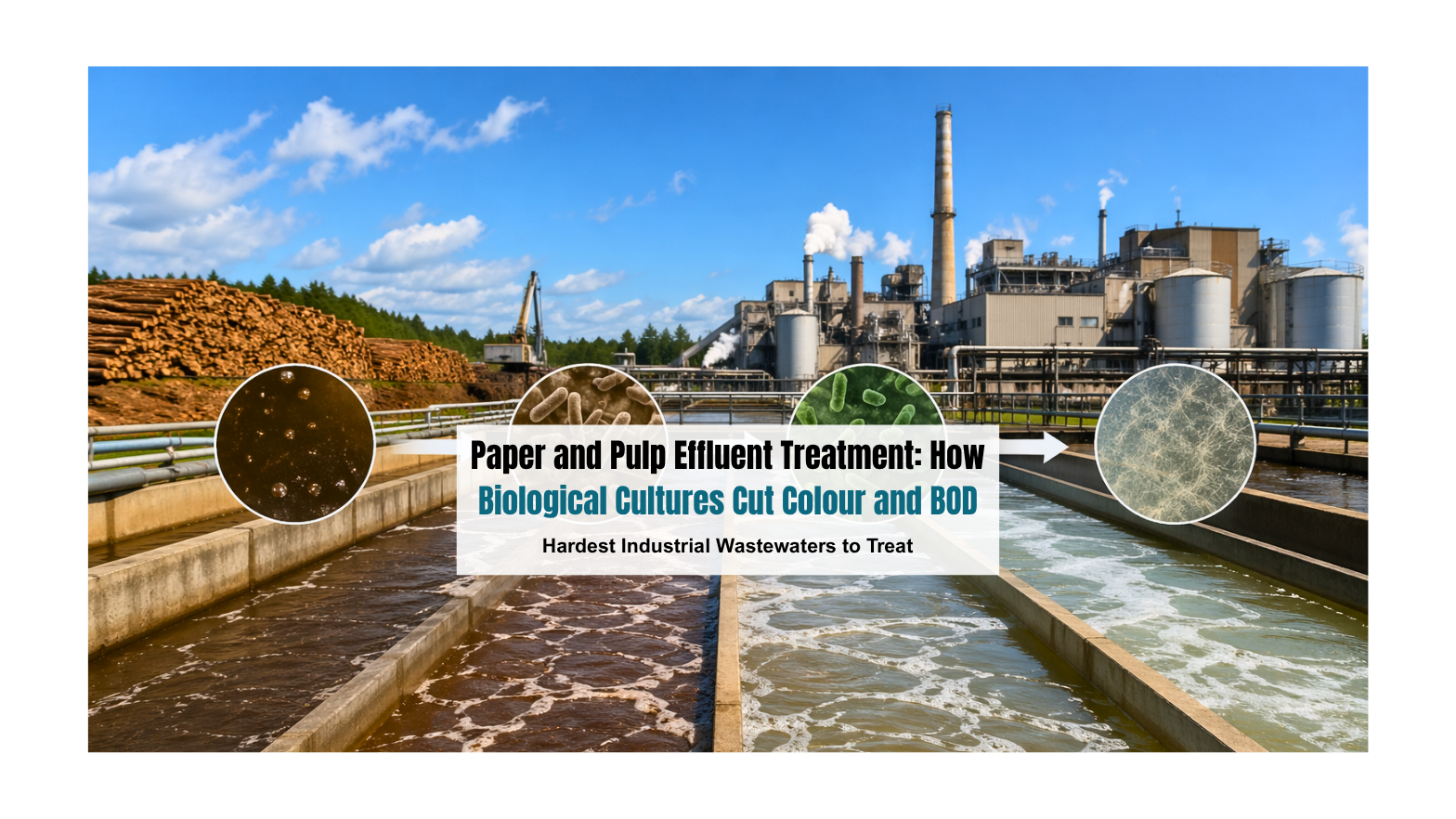

Paper and Pulp Effluent Treatment: How Biological Cultures Cut Colour and BOD
If you manage an ETP at a paper or pulp mill in India, you already know the feeling. The consent conditions sit on your desk. The CPCB ambient water quality norms have been tightened. Your State Pollution Control Board inspector is due next quarter, and the treated effluent flowing out of your clarifier still carries that unmistakable brown tint.
Paper mill effluent treatment is not a checkbox exercise anymore. In the current regulatory climate, with the National Green Tribunal actively penalizing non-compliant industrial units and SPCBs empowered to issue closure notices, the margin for error at your ETP is essentially zero. Real-time online monitoring systems (OCEMS) now transmit your treated effluent data directly to CPCB servers. There is no hiding a bad day at the plant.
The operators who are sleeping soundly at night are the ones who have moved beyond conventional treatment and invested in understanding the biology of their wastewater. This post explains exactly how Biological Cultures for Paper and Pulp Effluent Treatment are now doing what chemicals and physical processes alone never could: breaking down the stubborn organic load in paper and pulp effluent and delivering consistent compliance, month after month.
Why Paper Mill Effluent Is Among the Hardest Industrial Wastewaters to Treat
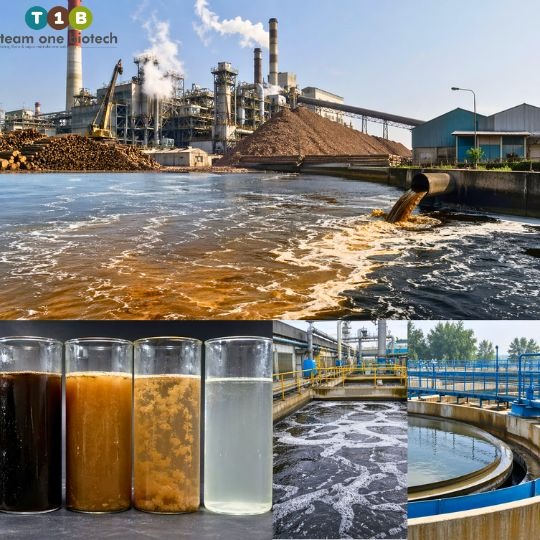
Before we discuss solutions, we need to respect the problem. Paper mill effluent treatment is uniquely challenging, and anyone who tells you otherwise is selling something oversimplified.
The core difficulty comes down to three factors:
1. Lignin-based colour is chemically recalcitrant
Lignin is the structural polymer that gives wood its rigidity. During the pulping process, whether kraft, sulphite, or mechanical, lignin is broken down and released in large quantities into the process water. The resulting effluent carries complex, high-molecular-weight chromophores that give paper mill discharge its characteristic dark brown to black colour.
These compounds do not respond well to conventional biological treatment because most common heterotrophic bacteria simply lack the enzymatic machinery to attack aromatic ring structures. Chlorine bleaching in older mills adds chlorinated lignin derivatives to the mix, further complicating biodegradation and potentially pushing you into the territory of acute aquatic toxicity.
2. High and variable Organic Loading Rates (OLR)
Paper mills do not produce uniform effluent. A mill running 100% recycled fibre will generate a different effluent profile than one using virgin wood pulp. OLR can swing dramatically based on:
- Grade of paper being produced (tissue, kraft board, newsprint, writing paper)
- Seasonal raw material variations
- Machine wash-down cycles and felt changes
- Chemical recovery system upsets
This variability is the enemy of a stable biological treatment system. A conventional activated sludge process tuned for average conditions will underperform on peak-load days, precisely the days when you can least afford it.
3. The BOD:COD ratio problem
Healthy aerobic digestion processes thrive on a favourable BOD:COD ratio. In paper mill effluent, the presence of non-biodegradable COD, principally from lignin and its derivatives, can push the BOD:COD ratio to values where standard microbial communities struggle to deliver meaningful COD removal. You can have perfectly functioning biomass and still fail your discharge norms because the recalcitrant fraction passes through untouched.
The Biological Solution: Bio-Augmentation for Lignin Degradation and BOD Reduction
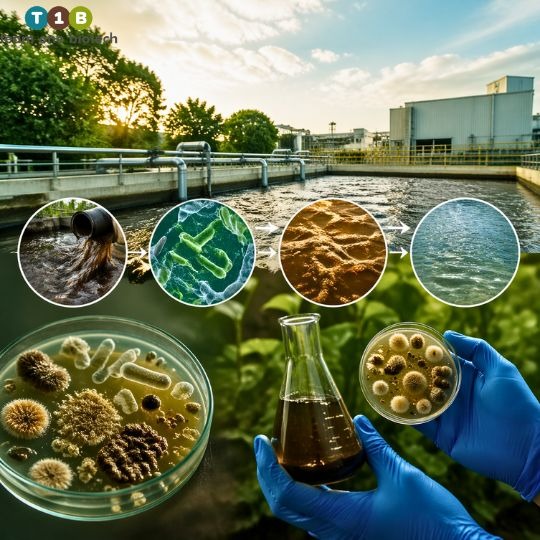
This is where the science becomes genuinely powerful, and where paper mill effluent treatment has seen the most significant advances in the last decade.
Bio-augmentation refers to the deliberate introduction of selected microbial strains or consortia into an existing biological treatment system. These are not generic cultures. For paper and pulp applications, the relevant organisms are typically:
- White-rot fungi such as Phanerochaete chrysosporium and related basidiomycetes, which produce lignin peroxidase and manganese peroxidase, extracellular enzymes specifically evolved to depolymerise lignin
- Laccase-producing bacteria including select Bacillus, Pseudomonas, and Streptomyces strains capable of oxidising phenolic compounds
- Specialised heterotrophic consortia that efficiently convert the lower-molecular-weight fragments produced by the above into carbon dioxide and water through conventional aerobic metabolism
The process works in a cascade. Lignin peroxidase and laccase break the high-molecular-weight chromophores into smaller, more biodegradable units. Downstream heterotrophic bacteria then mineralise these fragments, reducing both colour and soluble BOD simultaneously.
What does this look like in practice?
When properly applied and acclimatised to your specific effluent, a well-designed bio-augmentation programme targeting paper mill wastewater can be expected to deliver:
- BOD reduction in the range of 85% to 95%
- COD reduction in the range of 70% to 88%
- Colour reduction (ADMI units) in the range of 60% to 80%
Important Disclaimer: The numerical ranges cited in this article are general performance benchmarks drawn from field experience across multiple installations. Actual results will vary based on your specific ETP design, hydraulic retention time (HRT), sludge retention time (SRT), influent chemistry, temperature, and operational discipline. Contact Team One Biotech for a site-specific performance assessment before setting internal targets.
Paper Mill Effluent Treatment in the Indian Context: The Challenges Nobody Talks About
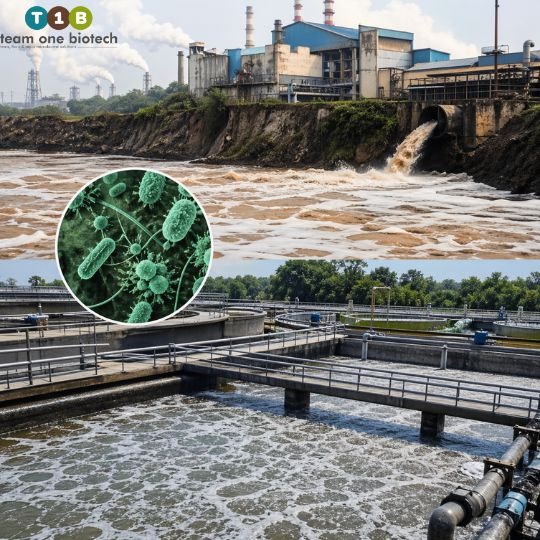
Global case studies are useful. Indian field realities are what matter when your phone rings at 2 AM because the final effluent is failing colour.
Seasonal temperature swings
Biological treatment systems are temperature-sensitive. In northern and central India, effluent temperatures in January can drop to 12°C to 16°C, dramatically slowing microbial metabolism. The same system in May may see influent temperatures exceeding 38°C to 42°C, stressing mesophilic organisms and risking process upset. A culture formulation that works in Maharashtra in February may behave very differently in Uttarakhand in December.
Effective bio-augmentation for Indian mills must account for this range. The microbial consortia supplied should demonstrate metabolic activity across a broad thermal window, and dosing protocols should be adjusted seasonally, not set once and forgotten.
Raw material and process variability in Indian mills
Many Indian paper mills operate on a mixed furnish, recycled OCC, agricultural residues like bagasse and wheat straw, and imported pulp. This creates an influent with a compositional complexity that European or North American mills rarely encounter. Bagasse-based effluents carry different hemicellulose fractions and silica loading than wood-based effluents. Your biological culture needs to be acclimated to your specific substrate chemistry, not a generic paper mill profile.
MLSS management under load shock
Maintaining Mixed Liquor Suspended Solids (MLSS) within the target range during production upsets is a persistent operational challenge. When a mill runs a grade change or recovers from a machine breakdown, the OLR spike that hits the aeration tank can crash a fragile biomass within 24 to 48 hours, setting back your compliance position by weeks.
Bio-augmented systems, particularly those using spore-forming bacterial strains, show significantly higher resilience to OLR shocks than conventional activated sludge alone. Dormant spores survive the upset and germinate rapidly once conditions stabilise, shortening recovery time considerably.
The push toward Zero Liquid Discharge
ZLD is no longer a future aspiration for many Indian paper mills, it is a regulatory condition of consent in several states. Biological pre-treatment quality directly determines the efficiency and cost of the downstream ZLD train (ultrafiltration, RO, MEE, and ATFD). Poor COD and colour removal at the biological stage means your RO membranes foul faster, your evaporator scaling increases, and your overall cost per kilolitre of recovered water rises sharply.
Investing in high-performance biological cultures is not just a compliance decision. In a ZLD framework, it is an operational cost management decision.
How Team One Biotech’s Biological Cultures Are Formulated for Paper Mill Applications
At Team One Biotech, our approach to paper mill effluent treatment begins with understanding that no two mills are identical. Our process:
Step 1, Influent characterisation. We analyse your raw effluent for BOD, COD, colour (ADMI), TSS, pH, TDS, sulphate, chloride, and the BOD:COD ratio. This tells us the biodegradable fraction we are working with and the recalcitrant COD we need to attack enzymatically.
Step 2, Culture selection and acclimation. Based on your effluent chemistry, we select and acclimate a consortium specifically prepared for your substrate. This is not an off-the-shelf product, it is a living, engineered microbial community tuned to your wastewater.
Step 3, Dosing protocol and integration. We provide a structured seed dosing protocol, typically delivered over a phased startup period of two to four weeks, followed by a maintenance dosing regime. Our technical team supports your plant operators through the process.
Step 4, Performance monitoring. We recommend a monitoring schedule targeting BOD, COD, MLSS, SVI, and colour at defined intervals through the startup phase to verify culture establishment and performance trajectory.
The result is a biological system that is more robust, more consistent, and better positioned to absorb the operational variability inherent in Indian paper mill production.
Practical Guidance for ETP Operators Running Paper Mill Wastewater
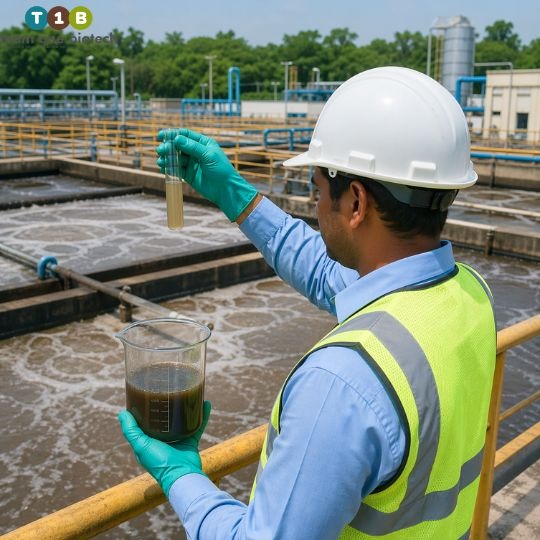
Whether or not you are currently using bio-augmentation, the following operational disciplines will strengthen any paper mill effluent treatment system:
- Monitor your F/M ratio regularly. Food-to-microorganism ratio is your early warning system for biomass health. A declining F/M in the face of consistent loading often signals a culture quality issue before it becomes a compliance event.
- Maintain dissolved oxygen in the aeration basin between 2.0 and 3.5 mg/L. Lignin-degrading organisms are obligate aerobes with high oxygen demand. Inadequate DO is the single most common reason bio-augmentation programmes underperform.
- Track SVI (Sludge Volume Index) weekly. Bulking sludge is a frequent consequence of low F/M and poor selector design in paper mill ETPs. High SVI will compromise your secondary clarifier and push TSS into your final effluent.
- Avoid sudden pH swings. Maintain aeration basin pH between 6.8 and 7.6. Paper mill effluents can be acidic or alkaline depending on the process stage contributing to the drain. Buffering capacity matters.
- Document OLR trends. If you can predict the days your OLR spikes, grade changes, week-end startups, rainy-season dilution events, you can pre-dose your biological cultures to have elevated biomass activity ready before the shock arrives, rather than reacting after.
The Bottom Line for EHS Managers
Colour and BOD in paper mill effluent are not problems that chlorine dosing or coagulant overdosing will solve sustainably. They are fundamentally biological problems that require biological solutions, specifically, the right microbial consortia, properly acclimated, correctly integrated, and operationally supported.
With CPCB and SPCB enforcement intensifying and ZLD mandates expanding, the question is no longer whether to invest in biological treatment performance. The question is whether you are getting the best possible biological performance from your current system.
If you are not consistently achieving your consent conditions, or if you are achieving them on borrowed time through chemical patches, it is time for a professional audit of your ETP’s biological health.
Team One Biotech offers site-specific ETP audits and customised microbial culture formulations for paper and pulp mills across India. Our technical team works directly with your plant operators, not just your corporate procurement team, because we understand that compliance is won or lost at the plant floor level.
Reach out to Team One Biotech today to schedule your consultation. Bring your last three months of influent and effluent data, and we will bring the science.
This Blog is intended for informational purposes for ETP/STP operators and EHS professionals. All performance ranges cited are general benchmarks only and do not constitute guaranteed outcomes. Actual treatment performance is dependent on site-specific conditions including ETP design, hydraulic and sludge retention times, influent chemistry, temperature, and operational management. Team One Biotech recommends a site-specific technical assessment before implementing any biological treatment programme.
Looking to improve your ETP/STP efficiency with the right bioculture?
Talk to our experts at Team One Biotech for customised microbial solutions.
Contact: +91 8855050575
Email: sales@teamonebiotech.com
Visit: www.teamonebiotech.com
Discover More on YouTube – Watch our latest insights & innovations!-
Connect with Us on LinkedIn – Stay updated with expert content & trends!